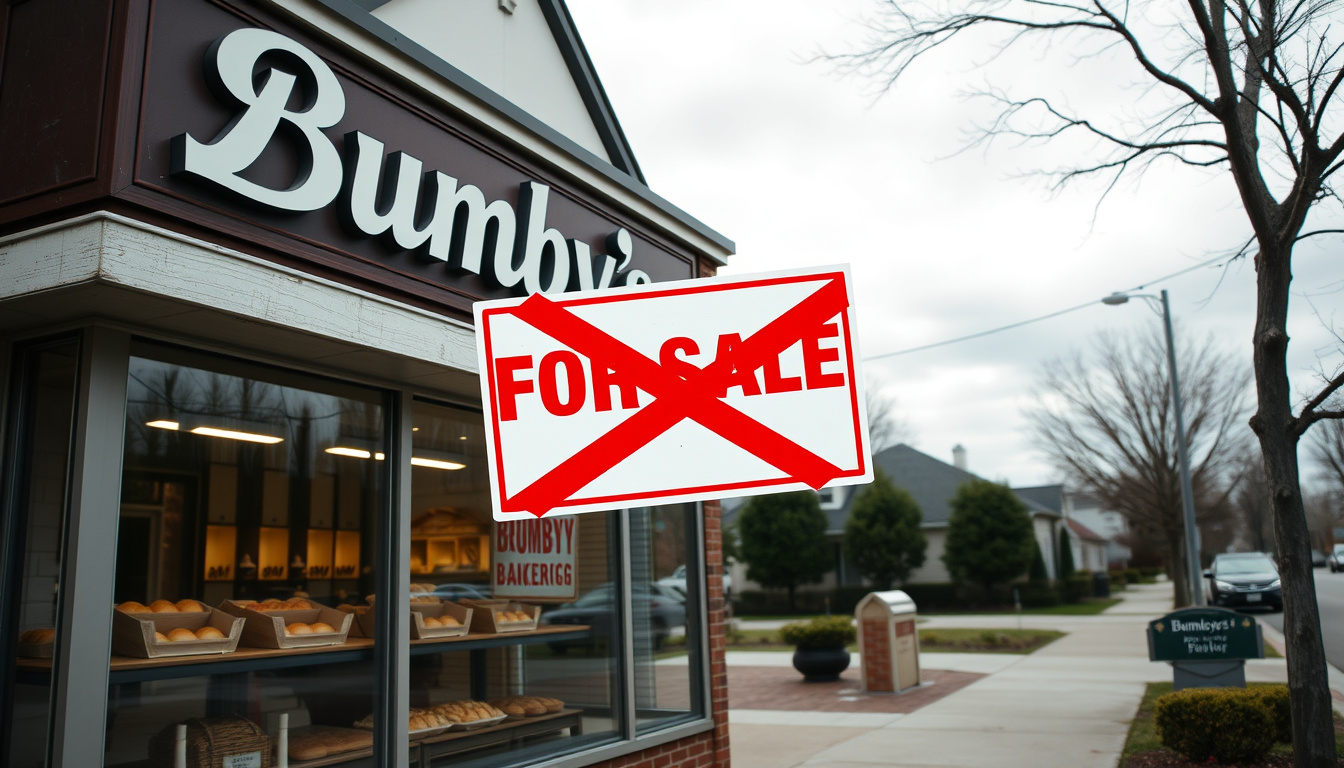
When Retail Food Group put Brumby’s Bakery up for sale in August 2025, it marked the latest chapter in a long decline for a chain that once operated over 320 franchises across Australia and New Zealand. Nearly two decades after RFG bought the brand for $46 million, no buyer emerged—and Brumby’s came off the market in February 2026. The failed sale tells a story about franchisee frustrations, mounting losses, and the shifting economics of Australia’s bakery market.
Parent Company: Retail Food Group · Reported Loss (2024 FY): $12 million+ · Sale Announcement: August 2025 · Sale Status: Taken off market February 2026 · Franchise Model: Available
Quick snapshot
- Sale announced August 2025 after $14.9m loss (QSR Media)
- Taken off market February 2026 with no buyer (Baking Business)
- RFG acquired Brumby’s for $46m in 2007 (2GB)
- Future sale plans for Brumby’s under RFG
- Exact franchise costs and ongoing fees
- Long-term viability without strategic investment
- Brumby’s continues operating under RFG
- Franchise model remains available
- RFG prioritising Firehouse Subs and Beefy’s Pies
What happened to Brumby’s bakeries?
Retail Food Group announced in August 2025 that it was exploring divestment options for Brumby’s Bakery, a brand it had purchased 18 years earlier for $46 million. The decision followed a $14.9 million statutory net loss after tax for fiscal year 2025, accompanied by a $12.2 million non-cash impairment on Brumby’s brand assets and goodwill. At the time of the announcement, Brumby’s operated 70 outlets across Australia.
RFG Chairman Peter George stated publicly that Brumby’s no longer aligned with the company’s growth priorities. “We determined that Brumby’s is no longer a key growth driver, having regard to the other levers now at our disposal, including Firehouse Subs, Beefy’s Pies and international expansion,” he said in the announcement covered by QSR Media.
Sale announcement details
The divestment process attracted interest but failed to deliver a buyer. According to Baking Business, Brumby’s spent over one year on the market before RFG removed it from sale in February 2026. No public statements detailed why prospective buyers walked away, though industry observers pointed to the chain’s declining store footprint and franchisee dissatisfaction.
Reasons for financial losses
Brumby’s has seen a sustained contraction since its peak under RFG ownership. The brand peaked at over 320 franchised stores in 2007—the same year RFG acquired it from founder Michael Sherlock for $46 million. By the time of the divestment announcement, fewer than 100 locations remained. Franchisees have cited frustration with RFG’s supply chain pricing as a driver of exits, with some de-badging to operate independently.
“What’s happening now in my suburb, my two newest Brumby’s stores they’ve both de-badged and gone off as independent. They can now buy their flour cheaper than what they could through RFG. Now they’re leaving in droves.”— Michael Sherlock, Brumby’s founder (2GB)
Current status after failed sale
Brumby’s continues operating despite the failed sale. The franchise model remains available to prospective operators, and existing stores continue trading under the Brumby’s banner. RFG has indicated it will retain the brand while focusing resources on other concepts within its portfolio.
Are Baker’s Delight and Brumby’s the same?
Brumby’s and Baker’s Delight are separate bakery franchises with distinct ownership structures and trajectories. Both originated from the Melbourne suburb of Ashburton, Victoria, and both trace their roots to the mid-1970s, but the comparison largely ends there. Baker’s Delight remains a privately held family business, while Brumby’s has passed through multiple owners since its founding.
Key differences in ownership and operations
Baker’s Delight has maintained its founding franchise model since 1975 and reportedly generates estimated revenues of $800 million annually. Brumby’s, by contrast, has changed hands twice—first through a public listing, then through RFG’s acquisition—and now operates from fewer than 100 locations compared to Baker’s Delight’s sustained national presence.
RFG acquired Brumby’s in 2007 for $46 million; Baker’s Delight has never been sold and remains privately controlled. One brand consolidated, the other fragmented.
Menu and store comparisons
Both chains offer similar product ranges centred on fresh bread, rolls, and pastries. However, store counts tell a divergent story. By 1992, Baker’s Delight had already expanded to 350 franchised stores across Australia and New Zealand. Brumby’s reached 280 stores by 2003 but never sustained that trajectory, falling to under 100 locations by 2026.
Market positioning
Baker’s Delight markets itself on community-focused franchise partnerships and remains one of Australia’s largest bakery chains. Brumby’s, under RFG’s ownership, has struggled to maintain relevance amid shifting consumer preferences and franchisee discontent. The failed sale underscores how far the brand has fallen from its peak.
How much does a Brumby’s franchise cost?
Franchise costs for Brumby’s are not publicly disclosed in detail by RFG. Prospective franchisees typically encounter initial investment requirements that include franchise fees, equipment, store fit-out, and working capital. The Brumby’s franchise website lists enquiry forms for those interested in opportunities, but specific dollar figures require direct consultation with RFG’s franchise development team.
Initial investment breakdown
Like many established franchise systems, Brumby’s expects prospective operators to demonstrate sufficient capital for site setup, licensing fees, and initial stock purchases. Industry benchmarks suggest Australian bakery franchises commonly require initial outlays ranging from $150,000 to $400,000 depending on store format and location, though verified Brumby’s-specific figures are not publicly available.
Ongoing fees
Franchise agreements typically include ongoing royalty payments, marketing contributions, and supply chain costs. Franchisees interviewed by 2GB have pointed to RFG’s supply pricing—particularly for flour—as a source of friction. Some former Brumby’s operators have reportedly switched to independent status specifically to access cheaper ingredient suppliers.
Comparison to other bakery franchises
Compared to Baker’s Delight, Brumby’s faces an uphill battle in attracting new franchisees given its declining store count and the brand’s uncertain trajectory post-failed sale. Baker’s Delight’s established model, larger network, and private ownership may present a more stable proposition for prospective operators despite potentially higher entry costs.
Who bought Brumby’s?
Retail Food Group bought Brumby’s in 2007 from founder Michael Sherlock, who retained five stores after the acquisition before eventually selling those as well. RFG had previously proposed a merger with Brumby’s in December 2006 before pivoting to a full acquisition the following year. The $46 million deal gave RFG control of a brand that had peaked at over 320 franchises but had begun experiencing competitive pressure.
Sale process timeline
The divestment announcement came approximately 18 years after RFG’s original acquisition. By August 2025, Brumby’s had contracted to roughly 70 outlets, down from over 320 at its peak. RFG’s announcement cited the brand’s diminished growth potential relative to other concepts in its portfolio, including Firehouse Subs and Beefy’s Pies.
Why no buyer emerged
Public reporting has not detailed specific reasons why the sale process failed, but analysts have pointed to the brand’s declining store footprint, franchisee dissatisfaction, and RFG’s own financial difficulties—including a failure to lodge half-yearly reports on time—as contributing factors. Baking Business reported the sale failure in early 2026 without specifying buyer objections.
Future ownership possibilities
For now, Brumby’s remains under RFG ownership. A renewed sale attempt cannot be ruled out, particularly if RFG’s financial position worsens or if franchisee exits accelerate. However, without a strategic turnaround or significant investment in the brand’s supply chain and support systems, future buyers may find the asset equally unattractive.
Brumby’s bakery locations and current status
Brumby’s continues to operate stores across Australia and New Zealand, though the exact current count is not publicly confirmed. RFG’s divestment announcement referenced 70 outlets in Australia, but independent estimates suggest the total—including New Zealand operations—may be under 100 locations. Store finder tools on Brumby’s website remain operational for customers seeking nearby locations.
Finding stores near you
The Brumby’s website offers a store locator for prospective customers. However, the brand’s reduced footprint means fewer locations than during its peak years. Customers in metropolitan areas are more likely to find operating stores, while regional coverage has contracted alongside the overall store count.
Impact of sale news on operations
The failed sale has not appeared to disrupt daily operations at remaining Brumby’s locations. Stores continue to trade, and the franchise model remains available to prospective operators. The more significant operational impact may be longer-term: franchisee confidence has been shaken, and ongoing de-badging to independent operations may further reduce the chain’s visible presence.
Specific locations like Cannonvale
Individual store status varies by location. Customers seeking Brumby’s stores in specific areas—including Cannonvale in Queensland—should consult the brand’s official store finder or social media channels for current operating status. Store closures and relocations continue to occur as franchisees make individual business decisions.
The following table directly compares key operational and ownership metrics for Brumby’s and Baker’s Delight, illustrating how the two rival chains diverged after their shared origins.
| Metric | Brumby’s | Baker’s Delight |
|---|---|---|
| Founded | 1975 (as Old Style Bread Centre) | 1975 |
| Current status | Under RFG ownership, under 100 locations | Privately held, national presence |
| Peak stores | Over 320 (2007) | 350+ (1992) |
| Acquisition history | Sold to RFG in 2007 for $46m | Never sold, family-owned |
| Supply model | RFG-controlled supply chain | Independent franchise model |
Timeline of key events
Brumby’s has undergone significant changes across five decades, from its origins in a Melbourne suburb to its current status as a struggling asset within RFG’s portfolio.
The timeline below tracks the major milestones in Brumby’s history, from its founding through to the failed divestment attempt.
| Date | Event |
|---|---|
| 1975 | First Brumby’s (Old Style Bread Centre) opened in Ashburton, Victoria by Roger Gillespie |
| 1985 | Rebranded to Brumby’s for ASX listing as Dancorp Limited |
| 2003 | Brumby’s listed on Bendigo Stock Exchange with 280 franchises |
| 18 December 2006 | RFG proposed merger with Brumby’s |
| 2007 | RFG acquired Brumby’s for $46 million from Michael Sherlock |
| 2012 | Carbon tax memo controversy; Managing Director later apologised |
| 2025 | FY2025 $14.9m loss; $12.2m impairment; divestment announced August 2025 |
| February 2026 | Sale process fails; Brumby’s taken off market |
The pattern reveals a chain that expanded rapidly under public ownership before a single corporate buyer consolidated the brand—then contracted sharply over nearly two decades of RFG stewardship.
Brumby’s and its future rival Baker’s Delight both opened within walking distance in Ashburton, Victoria in 1975. Fifty years later, Baker’s Delight has never been sold and operates hundreds of stores. Brumby’s failed to find a buyer and now operates fewer than 100 locations.
What’s confirmed and what’s still unclear
Confirmed
- Sale announced August 2025 after $14.9m loss (QSR Media)
- Taken off market February 2026 with no buyer (Baking Business)
- Retail Food Group ownership since 2007
- Peak of 320+ franchises in 2007
- Franchisee de-badging trend ongoing
- RFG prioritising Firehouse Subs over Brumby’s
Unclear
- Whether RFG will attempt another sale
- Official current store count beyond estimates
- Why specifically no buyer emerged
- Exact franchise fees and ongoing costs
- Long-term brand viability without investment
- RFG’s own financial stability given reporting issues
Related reading: Bunnings Black Friday · Alpha Car Hire Review Australia
Brumby’s failed sale echoes broader industry woes, much like the Morton’s Rolls collapse that hit Morton’s Rolls amid pandemic debts in 2023.
Frequently asked questions
Why was Brumby’s Bakery put up for sale?
RFG cited Brumby’s declining store count and reduced growth potential relative to other brands in its portfolio. The FY2025 $14.9 million loss and $12.2 million impairment on Brumby’s brand assets prompted the divestment announcement in August 2025.
Is Brumby’s Bakery still operating?
Yes. Brumby’s continues to operate stores across Australia and New Zealand despite the failed sale. The franchise model remains available to prospective operators, and existing stores are trading under the Brumby’s banner.
What is the future of Brumby’s franchise?
The immediate future remains uncertain. RFG has retained the brand after the failed sale but has indicated Brumby’s is not a key growth driver. Franchisee exits and de-badging continue, and a renewed sale attempt is possible if RFG’s financial position deteriorates.
How does Brumby’s compare to other Australian bakeries?
Brumby’s trails Baker’s Delight significantly. Baker’s Delight operates a large national network as a privately held family business. Brumby’s has contracted to under 100 locations from a peak of over 320 in 2007, largely due to franchisee dissatisfaction with RFG’s supply pricing and management decisions.
Where can I find Brumby’s Bakery menu and prices?
The Brumby’s website offers store information and product details. Note that store availability varies by location, and the brand’s reduced footprint means fewer locations than during its peak years in the 2000s.
Is Brumby’s affected by Aldi or other supermarket bakeries?
Australian supermarket chains operate in-store bakeries that compete with independent and franchised bakery retailers. Brumby’s faces competition from multiple directions—supermarket bakeries, rival franchises like Baker’s Delight, and independent artisan bakeries—contributing to the challenging operating environment.
What bread is most popular in Australia?
White bread and wholemeal varieties remain the most popular in Australian households. Sourdough has grown in popularity in urban centres. Brumby’s historically offered a range of bread types, though specific product preferences vary by customer demographics and store location.
For investors and industry observers tracking RFG’s portfolio restructuring, the Brumby’s outcome signals a brand in structural decline that failed to attract buyers at any price. The question now is whether RFG can arrest the franchisee exodus and stabilise the chain—or whether further contraction lies ahead.

Rachel Bennett leads fact-checking, source verification and corrections at Coast Monitor.