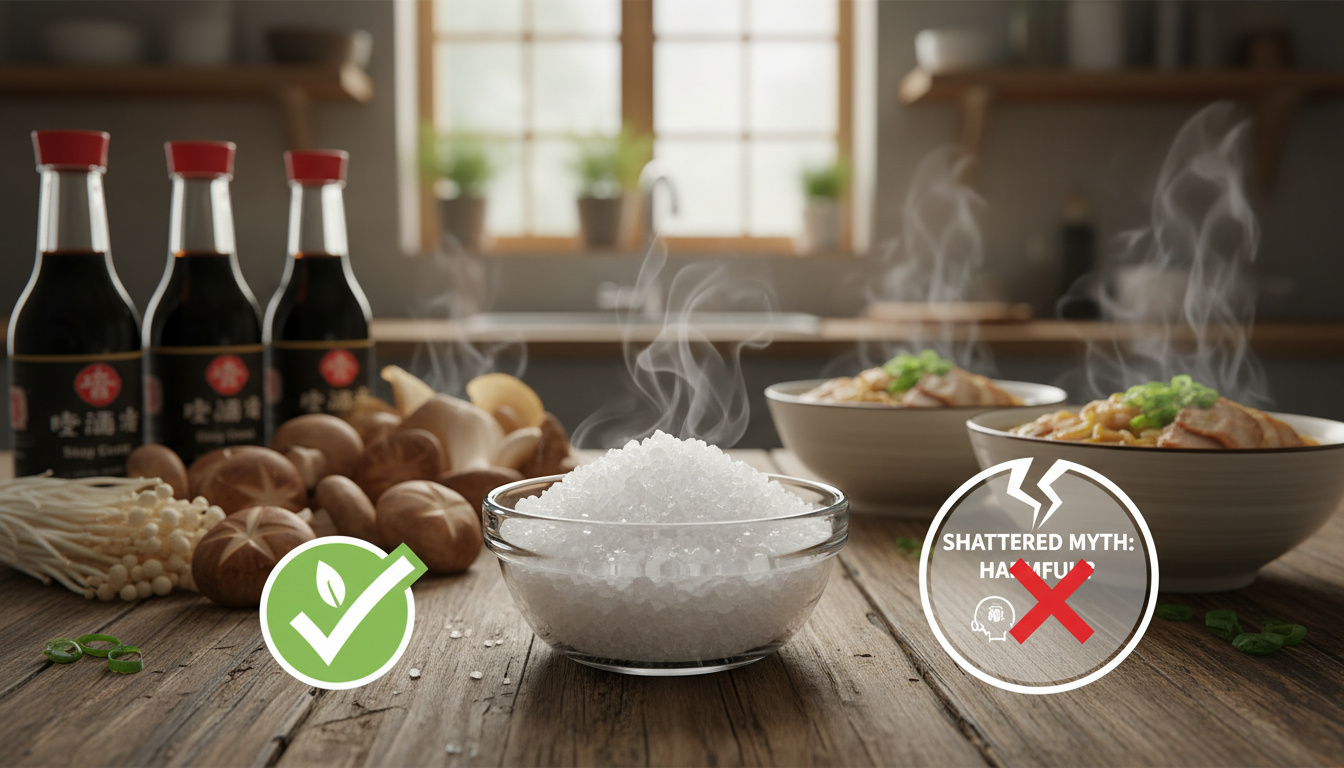
Monosodium glutamate, commonly abbreviated as MSG, stands as one of the most scrutinized yet misunderstood ingredients in modern food production. This sodium salt of glutamic acid serves primarily as a flavor enhancer, intensifying savory tastes across processed meats, canned goods, and Asian cuisine staples. Despite decades of scientific validation from major health authorities, consumer anxiety persists around its safety profile and potential physiological effects.
The compound occurs naturally within protein-containing foods, though commercial production involves fermenting carbohydrate sources such as starch, sugar beets, or molasses to isolate the glutamate. Regulatory agencies including the FDA, the World Health Organization, and the European Food Safety Authority have consistently classified MSG as safe for general consumption, though anecdotal reports of sensitivity continue to fuel debate among certain consumer groups.
Understanding what MSG actually is—beyond the cultural mythology surrounding it—requires examining both its chemical structure and the extensive toxicological research conducted over the past several decades.
What is MSG?
MSG stands for monosodium glutamate, a flavor enhancer manufactured by combining glutamate—an amino acid found naturally in proteins—with sodium according to dietary sources. The food industry utilizes this compound to amplify the savory characteristics of products ranging from processed meats and canned vegetables to soy sauce, crackers, and commercial seasoning blends.
Sodium salt of glutamic acid (amino acid)
FDA Generally Recognized As Safe; WHO/EFSA approved
Less than 1% of population
Flavor enhancement in savory foods
Key characteristics
- Scientific consensus across FDA, WHO, and EFSA examinations affirms safety at typical consumption levels
- Sensitivity affects less than one percent of consumers, producing mild symptoms that resolve without medical intervention
- MSG does not trigger allergic reactions because glutamate is an amino acid, not a whole protein according to biochemical analyses
- The International Headache Society removed MSG from headache causative factors in 2018 due to insufficient evidence per association records
- Animal studies showing adverse effects employed methodological approaches with limited relevance to human dietary intake researchers noted
- No increased tumor rates were observed even at highest tested consumption doses toxicology reports indicate
- Reported symptoms typically require ingestion of 3-5 grams on an empty stomach, exceeding normal dietary exposure Health Canada documentation shows
Chemical and regulatory profile
| Characteristic | Details |
|---|---|
| Chemical Identity | Sodium salt of glutamic acid (amino acid) |
| Primary Function | Flavor enhancement in savory foods |
| Regulatory Status | FDA Generally Recognized As Safe (1990s FASEB review) per Harvard Health |
| International Standing | Approved by WHO and EFSA |
| Population Sensitivity | Less than 1% may experience mild symptoms clinical estimates suggest |
| Typical Reaction Dose | 3-5 grams consumed without food documented cases indicate |
| Onset Time | Within two hours of consumption |
| Duration | Temporary, not requiring treatment Mayo Clinic notes |
Is MSG bad for you?
Major health authorities have concluded that MSG poses no danger to the general population when consumed at typical dietary levels. The FDA determined MSG safe after the Federation of American Societies for Experimental Biology conducted a comprehensive toxicological review during the 1990s, which found no evidence of serious adverse effects under normal consumption patterns.
Regulatory safety assessments
Health Canada confirms that most people can safely consume foods containing high levels of glutamate, while the European Food Safety Authority and World Health Organization maintain similar positions regarding the additive’s safety profile. These determinations rely on decades of clinical and epidemiological data examining consumption patterns across diverse populations.
Harvard Health reports that less than one percent of the general population appears particularly sensitive to MSG, with symptoms typically appearing within two hours of consumption and resolving without medical intervention.
Reported symptoms and clinical evidence
Some individuals report symptoms collectively referred to as “Chinese restaurant syndrome” or MSG symptom complex, including headache, flushing, body tingling, heart palpitations, chest heaviness, nausea, and drowsiness. However, researchers have found no clear scientific proof linking MSG to these symptoms. In reported cases, affected individuals had consumed between 3 and 5 grams of MSG on an empty stomach without food.
Preclinical studies using animal models have associated high-dose MSG administration with cardiovascular stress, liver steatosis, metabolic changes, and neurological alterations. However, researchers identified significant methodological limitations in these studies, concluding they have limited relevance for extrapolating to dietary human intakes.
What foods contain MSG?
Commercial food applications
The food industry incorporates MSG into numerous processed products to enhance palatability without significantly increasing sodium content compared to table salt. Common applications include processed meats, canned vegetables, soy sauce, crackers, and seasoning blends. The additive allows manufacturers to reduce overall sodium while maintaining savory flavor profiles.
Naturally occurring glutamates
Glutamate occurs naturally in protein-containing foods such as cheeses, tomatoes, and mushrooms, where it provides the same umami flavor characteristic associated with added MSG. The human body metabolizes naturally occurring glutamate and added MSG identically, processing both through normal digestive pathways without distinguishing between sources.
For readers examining cultural references in food and society, understanding how ingredients traverse different contexts may prove useful when exploring Top of the Town – Meaning, Origin and Irish Reality.
Common MSG myths and facts
The “Chinese restaurant syndrome” misconception
The term “Chinese restaurant syndrome” originated from anecdotal reports in the 1960s but lacks scientific substantiation. Despite widespread public belief connecting MSG consumption to headaches and allergic reactions, clinical research has not established a causal relationship between the additive and these symptoms. The International Headache Society formally removed MSG from its list of headache causative factors in January 2018, citing insufficient evidence.
Despite persistent claims, biochemical analysis confirms MSG is not an allergen. Glutamate by itself cannot elicit allergic reactions, which require whole protein triggers. Reported reactions represent sensitivity rather than allergy.
Gluten and dietary restrictions
MSG does not contain gluten. The manufacturing process involves fermentation of carbohydrate sources rather than wheat, barley, or rye derivatives. Individuals with celiac disease or gluten sensitivity can consume MSG without triggering gluten-related immune responses, though those with specific sensitivities to the additive itself should still exercise caution.
Food manufacturers may list MSG as “monosodium glutamate,” “glutamic acid,” or under the umbrella term “natural flavoring.” The FDA requires clear labeling of added MSG, though glutamate occurring naturally in ingredients such as hydrolyzed protein or yeast extract may not be specifically identified as MSG. For those interested in learning more about the benefits of magnesium, Mihin magnesium auttaa provides further details.
How has MSG regulation evolved?
- : The Federation of American Societies for Experimental Biology conducts comprehensive safety review for the FDA, establishing the foundation for modern safety assessments according to Harvard Health.
- : The International Headache Society removes MSG from its list of headache causative factors, citing lack of scientific evidence per association records.
- : Ongoing toxicological monitoring confirms safety at typical dietary levels, with researchers noting no evidence that MSG is harmful at standard consumption levels.
What do we know for certain?
| Established Facts | Unresolved Questions |
|---|---|
| FDA, WHO, and EFSA confirm safety for general population | Long-term metabolic impacts in humans at standard dietary doses |
| Less than 1% experience mild, temporary sensitivity symptoms | Exact biochemical mechanism triggering symptoms in sensitive individuals |
| Not an allergen; cannot cause allergic reactions per biochemical analysis | Distinguishing effects of natural versus synthetic glutamate sources |
| No carcinogenic effects observed in toxicology studies safety platforms report | Predictive markers for identifying sensitive populations before consumption |
Why does MSG remain controversial?
The persistent stigma surrounding MSG stems largely from historical xenophobia and misinformation rather than scientific evidence. The additive enables food manufacturers to create palatable products with reduced sodium content, potentially offering public health benefits for hypertension management. However, cultural associations with Asian cuisine and outdated terminology such as “Chinese restaurant syndrome” continue to generate unfounded anxiety despite regulatory reassurances.
Clinical research into metabolic effects shows mixed results regarding appetite stimulation. Some studies suggest MSG may enhance salivary secretion and interfere with carbohydrate metabolism, while research on satiety effects varies by meal composition. Human studies regarding body weight remain equivocal, contrasting with animal studies that reported weight increases only at extremely high doses.
What do the experts say?
Any ill effects from MSG are mild and short-lived, typically associated with large doses exceeding 3 grams consumed without food.
Federation of American Societies for Experimental Biology, 1990s Review
Researchers have found no clear scientific proof linking MSG to these symptoms.
Mayo Clinic Clinical Assessment
Symptoms are usually temporary and not associated with severe adverse health effects.
Health Canada Safety Documentation
The bottom line
Monosodium glutamate represents a safe, effective flavor enhancer for the vast majority of consumers, backed by decades of toxicological research and unanimous regulatory approval from international health authorities. While a small subset of individuals may experience mild, transient symptoms under specific high-dose conditions, the scientific consensus firmly supports MSG’s safety at typical dietary levels. Those concerned about sensitivity should monitor portion sizes and consumption patterns, though complete avoidance remains unnecessary for most populations. For additional context on how cultural perceptions shape our understanding of consumer products, consider exploring The Hunting Wives – Summary, Author and Netflix Guide.
Frequently asked questions
What does MSG stand for?
MSG stands for monosodium glutamate, the sodium salt of glutamic acid, an amino acid that occurs naturally in proteins.
Is MSG natural?
Glutamate occurs naturally in many protein-containing foods. Commercial MSG is produced through fermentation of carbohydrate sources such as starch or sugar beets, creating an identical compound to naturally occurring glutamate.
Is MSG gluten-free?
Yes. MSG does not contain gluten. It is produced from fermented carbohydrates rather than wheat, barley, or rye, making it safe for individuals with celiac disease.
Does MSG cause headaches?
No scientific evidence supports this claim. The International Headache Society removed MSG from its list of headache causes in 2018 due to lack of evidence.
Can MSG trigger asthma attacks?
People with asthma may experience bronchospasm in rare cases, though Health Canada notes such reactions are uncommon and typically mild.

Emily Clarke covers business, markets and economic policy for Coast Monitor.