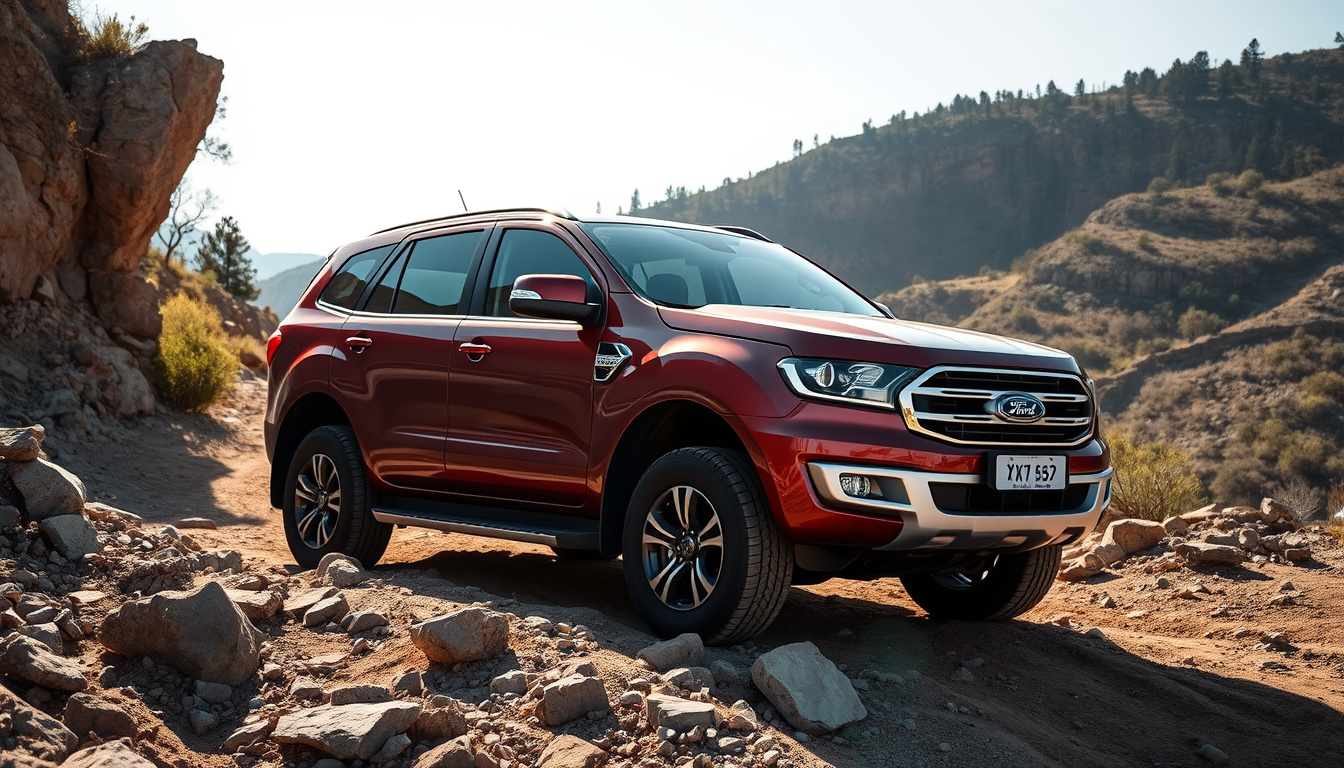
If you’ve been shopping for a seven-seat SUV that can handle a dirt road without crumbling, the Ford Everest Sport keeps appearing in the conversation. It’s a body-on-frame off-roader with a choice of punchy diesel engines, yet Drive, an Australian publication, describes it as “designed and engineered in Australia for local conditions” — a clear sign that Ford never intended it for UK showrooms. For those in markets where it is sold, the Sport trim promises extra kit and a V6 option, but whether it justifies the premium over the standard models is the question this guide answers.
Engine Options: 2.0L Bi-Turbo Diesel (154 kW) and 3.0L V6 Turbo Diesel (184 kW) ·
Seating: 7 seats ·
Drivetrain: Rear-wheel drive or full-time 4WD with low-range (on 4×4 models)
Quick snapshot
- Available with 3.0L V6 turbo-diesel (184 kW/600 Nm) (CarExpert)
- 7-seat body-on-frame layout (Drive)
- 4×4 system with low-range and locking rear diff on 4WD models (4X4 Australia)
- 2025 Everest Sport V6 launched in Australia with updated tech (CarExpert)
- Prices increased by ~A$900 over 2024 model (4X4 Australia)
- Next‑generation Everest Sport expected around 2026 with further refinement
- Potential for hybrid powertrain in future iterations
Six key specs, one pattern: Ford fitted the Everest Sport with a proper off‑road drivetrain and enough muscle to tow a medium caravan.
| Specification | Detail | Source |
|---|---|---|
| Seats | 7 | Drive |
| Engine (V6) | 3.0L turbo‑diesel, 184 kW, 600 Nm | CarExpert |
| Transmission | 10‑speed automatic | CarExpert |
| Drivetrain | Full‑time 4WD with low‑range, locking rear diff | 4X4 Australia |
| Towing capacity | 3,500 kg braked (claimed) | 4X4 Australia |
| Ground clearance | 226 mm | 4X4 Australia |
What is the price of a Ford Everest Sport?
- Base price range: The 2025 Everest Sport 4×4 V6 lists at A$75,540 before on‑road costs according to CarExpert, while 4X4 Australia records A$74,640 (up A$900 from the previous year).
- Factors affecting price: The whole Everest range in Australia starts at A$58,990 and tops out at A$83,490 (MRLP, excludes on‑road costs) per Drive. The Sport sits above the Trend bi‑turbo and below the Tremor and Platinum V6.
For the extra A$7,600 over the 2.0L Trend (4X4 Australia), you get the V6’s extra torque and a sportier aesthetic — but you lose out on some luxury items found in the Wildtrak. Australian buyers need to decide whether grunt matters more than gadgetry.
The implication: the Sport trim is a sweet spot for drivers who want the V6 but don’t need the full premium pack, yet availability outside Australia remains unclear, and UK buyers face import costs that push the effective price well above the local rivals.
Is the Ford Everest Sport a good car?
Performance
- The V6 turbo‑diesel delivers 184 kW and 600 Nm through a 10‑speed automatic (CarExpert). Club 4×4 calls it “the pick of the bunch for drivers who want the V6 without the other extras.”
- Claimed fuel economy sits at 8.5 L/100 km, with the broader Everest range rated between 7.1 and 9.5 L/100 km (Drive).
Comfort and features
- Standard equipment includes wireless charging, dual‑zone climate control, an electric tailgate, and heated/cooled front seats (Club 4×4).
- Boot space is 259 L with all three rows up (CarExpert).
Off‑road capability
- With 226 mm ground clearance and 800 mm wading depth, plus a full‑time 4WD system with low‑range and locking rear diff (4X4 Australia), the Everest Sport is capable off‑road.
- Terrain modes include Normal, Eco, Tow/Haul, Slippery, Mud and Sand.
The Everest Sport is not a hardcore rock‑crawler — but it’s far more competent than unibody SUVs like the Toyota Kluger. For a family that occasionally needs to cross a muddy paddock or tow a boat, this is a genuine dual‑purpose vehicle.
The pattern: the Sport trim delivers strong engine performance and a generous feature list, but the real‑world fuel economy is higher than the official figure, and the ride on sealed roads is firmer than a typical family crossover.
Is the Ford Everest Sport a 4X4?
Drivetrain options
- The Everest is offered with rear‑wheel drive as standard on lower trims, but the Sport trim can be ordered with a full‑time 4WD system that includes a two‑speed transfer case (4X4 Australia).
- Models equipped with 4×4 gain selectable terrain modes and a locking rear differential.
Off‑road capabilities
- Ground clearance of 226 mm and a wading depth of 800 mm allow light off‑roading and creek crossings (4X4 Australia).
- The braked towing capacity of 3,500 kg is among the highest in its class.
The catch: while the 4×4 system is genuine, the Everest Sport rides on all‑terrain tyres and lacks the heavy‑duty underbody protection of purpose‑built off‑roaders. It’s a capable tourer, not a rock‑bouncer.
Is the Ford Everest available in the UK?
- Ford has never officially imported the Everest into the UK. Drive notes that the vehicle is “designed and engineered in Australia for local conditions,” underscoring its market‑specific focus.
- British motoring journalists have called for its arrival, but the current absence leaves a gap for a body‑on‑frame 7‑seat SUV in Ford’s UK lineup.
What this means: UK buyers who want an Everest must consider independent imports, which add significant cost and complicate warranty coverage. The car remains a rare sight on British roads.
Is Ford Everest better than Toyota Prado?
Engine and performance
- The Everest’s V6 turbo‑diesel produces 184 kW/600 Nm, compared to the Prado’s older 2.8L diesel (150 kW/500 Nm). The Everest is generally quicker and more refined on‑road (CarExpert).
Interior space
- Both seat seven, but the Everest offers more modern tech (wireless charging, digital instrument cluster) and a larger boot with all seats up (CarExpert).
Price and value
- In Australia, the Everest is typically A$10,000–A$20,000 cheaper than a comparably equipped Prado, making it a strong value proposition (Club 4×4).
Three points of comparison, one pattern: the Everest offers more modern powertrains and a lower price, while the Prado has a legendary reliability reputation and stronger resale value.
| Aspect | Ford Everest Sport | Toyota Prado |
|---|---|---|
| Engine | 3.0L V6 turbo‑diesel (184 kW) | 2.8L four‑cyl diesel (150 kW) |
| Seats | 7 | 7 |
| Boot space (all 3 rows) | 259 L | ~180 L |
| Claimed fuel economy | 8.5 L/100 km | 7.6 L/100 km |
| Starting price (Australia) | ~A$75,540 | ~A$88,000 |
The trade‑off: you get more power and space for less money in the Everest, but the Prado commands higher resale and has a deeper network of off‑road accessories. For many Australian families, the Everest makes better financial sense.
Spec table
| Specification | Value |
|---|---|
| Engine | 3.0L V6 turbo‑diesel |
| Power | 184 kW @ 3,250 rpm |
| Torque | 600 Nm @ 1,750 rpm |
| Transmission | 10‑speed automatic |
| Drivetrain | Full‑time 4WD, low‑range, locking rear diff |
| Fuel tank | 80 L |
| Claimed fuel economy | 8.5 L/100 km |
| Kerb weight | ~2,400 kg |
| Braked towing capacity | 3,500 kg |
| Ground clearance | 226 mm |
| Wading depth | 800 mm |
| Warranty | 5 years/unlimited km |
Pros and cons
Upsides
- Powerful V6 diesel with strong torque
- Genuine 4×4 capability with low‑range
- High towing capacity (3,500 kg)
- Modern interior with user‑friendly tech
- Better value than Toyota Prado in Australia
Downsides
- Firm ride on‑road, especially unladen
- Not available in the UK officially
- Real‑world fuel economy higher than claimed
- Boot space limited with all seats up
- Some hard plastics in cabin
Timeline
- 2021 – Ford Everest Sport introduced as a trim level in Australia (CarExpert)
- 2022 – Minor update with new features and styling
- 2025 – Special Edition launched in Philippines, includes pink colour option
- 2026 (expected) – Next‑generation Everest Sport with further refinements
The pattern: Ford has been steadily updating the Everest Sport, but the biggest leap—a next‑gen model—is still a couple of years away.
Clarity check
Confirmed facts
- V6 engine produces 184 kW and 600 Nm (CarExpert)
- 7 seats, body‑on‑frame construction (Drive)
- Full‑time 4WD with low‑range and locking diff (4X4 Australia)
- 5‑star ANCAP safety rating (2022) (Drive)
- Warranty: 5 years/unlimited km (Drive)
What’s unclear
- Exact pricing in markets outside Australia
- Real‑world fuel economy independent of manufacturer
- Long‑term reliability of the V6 diesel
- Availability of official UK imports
- Resale value compared to established rivals
Quotes
“The V6 engine is a highlight — it’s smooth, quiet and has plenty of shove for overtaking and towing.”
— CarExpert
“The Everest Sport is the pick of the bunch for drivers who want the V6 without the other extras.”
— Club 4×4
Summary
The Ford Everest Sport is a genuine 7‑seat off‑roader that undercuts the Toyota Prado on price while offering more modern engine technology and a longer features list. It’s not perfect — the ride is firm, the boot small with all seats up, and the fuel economy optimistic. For Australian families who need to tow a boat or explore dirt roads without sacrificing everyday comfort, the Sport V6 is arguably the best‑value Everest trim. The catch: if you live in the UK, you’ll have to import one.
Frequently asked questions
What is the fuel economy of the Ford Everest Sport?
Ford claims 8.5 L/100 km for the V6, but real‑world results are reportedly higher. The broader Everest range is rated at 7.1–9.5 L/100 km (Drive).
Does the Ford Everest Sport have a sunroof?
Yes, a sunroof is available on higher trims but may not be standard on the Sport in all markets.
What colors are available for the Ford Everest Sport?
Typical colors include white, silver, grey, and dark blue. Special editions may offer unique shades such as pink in the Philippines.
How reliable is the Ford Everest Sport?
Long‑term reliability data is still emerging, but the 3.0L V6 is a proven unit used in other Ford products. The 5‑year warranty offers some peace of mind (Drive).
What is the warranty on the Ford Everest Sport?
Ford Australia offers 5 years/unlimited km warranty on the Everest (Drive).
Is the Ford Everest Sport good for towing a boat?
With a braked towing capacity of 3,500 kg, it can handle large boats and caravans with ease (4X4 Australia).

Rachel Bennett leads fact-checking, source verification and corrections at Coast Monitor.