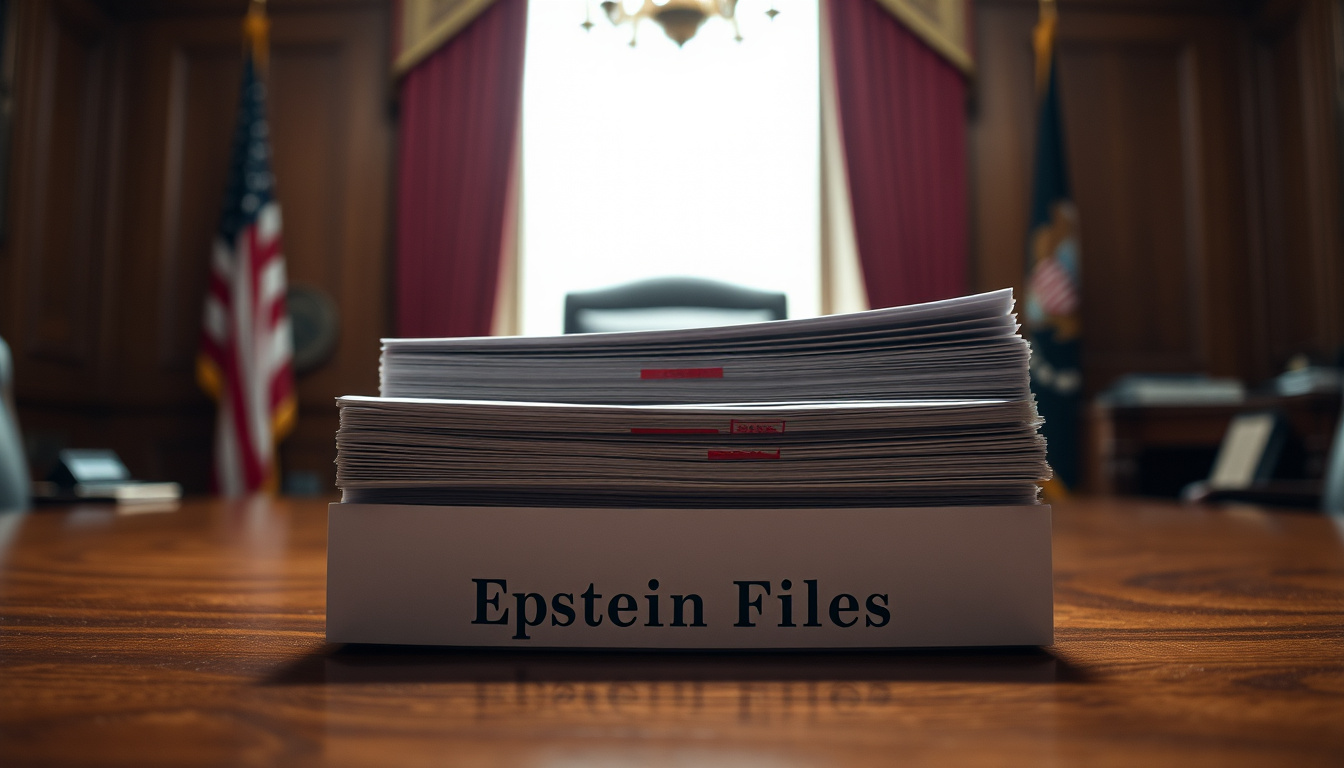
The US government has released approximately 3.5 million pages of documents related to Jeffrey Epstein’s sex trafficking investigations since 2019 — enough to fill roughly 175 filing cabinets. Federal agencies have confirmed what is in these releases and what remains unclear.
Documents released: 3.5 million pages · Primary source: US Department of Justice · Related cases: Sex trafficking investigations · Epstein death: 2019 in prison · Key formats: Documents, images, videos, emails
Quick snapshot
- Files relate to two sex trafficking investigations (DOJ Office of Public Affairs)
- 3.5 million pages released as of January 30, 2026 (DOJ Office of Public Affairs)
- Include documents, images, videos, emails (DOJ Office of Public Affairs)
- ~2.5 million pages remain unreleased (DOJ identified 6 million total) (Wikipedia – Epstein files)
- Full unredacted contents of withheld materials (Wikipedia – Epstein files)
- Specific implications for named individuals (DOJ Office of Public Affairs)
- Transparency Act signed November 19, 2025 (DOJ Office of Public Affairs)
- Initial tranche (Data Sets 1–8): December 19, 2025 (Wikipedia – Epstein files)
- Major tranche (Data Sets 9–12): January 30, 2026 (DOJ Office of Public Affairs)
- FBI Director Kash Patel tasked to deliver remaining documents by February 28, 2026 (DOJ Office of Public Affairs)
- DOJ characterized January 30 release as “final major release” (Wikipedia – Epstein files)
- Rep. Khanna and critics continue monitoring compliance (Wikipedia – Epstein files)
The table below summarizes the scope, releaser, and format of the Epstein files as confirmed across multiple federal sources.
| Label | Value |
|---|---|
| Total volume | Millions of documents |
| Main releaser | US Department of Justice |
| Subject | Jeffrey Epstein sex trafficking |
| Formats | Pages, images, videos, emails |
| Release start | Post-2019 investigations |
What is the latest verified information about what are the epstein files?
Recent DoJ tranches
The US Department of Justice released the first major batch of Epstein-related documents on December 19, 2025, pursuant to the Epstein Files Transparency Act. That initial tranche (Data Sets 1–8) contained approximately 12,285 items spanning roughly 125,575 pages, though over 500 pages reportedly came back entirely blacked out — a detail that drew bipartisan criticism at the time. According to the DOJ’s own press office, sixteen files were later removed from the public webpage within a day of that release.
The more substantial disclosure came on January 30, 2026, when the DOJ published Data Sets 9–12. That release brought the total to nearly 3.5 million pages, alongside more than 180,000 images and 2,000 videos — figures confirmed directly by the DOJ Office of Public Affairs.
Key 2025–2026 releases
Deputy Attorney General Todd Blanche stated that the January 30, 2026 release achieved full compliance with the Epstein Files Transparency Act, and characterized it as the final major tranche. Attorney General Pamela Bondi, who had released the first phase of declassified materials with FBI cooperation earlier, subsequently tasked FBI Director Kash Patel with investigating why the full Epstein documents were not initially disclosed — demanding the remainder be delivered by February 28, 2026.
The DOJ itself flagged that releases may contain “fake or falsely submitted” material, and explicitly described certain claims against President Trump as “unfounded and false.” That self-disclaimer suggests readers should treat unverified social-media summaries of the files with significant caution.
The Epstein Files Transparency Act was signed into law on November 19, 2025, after passing the House on a 427–1 vote on November 18, 2025.
What should readers know first about what are the epstein files?
Definition and scope
Britannica describes the Epstein files as thousands of pages from two sex trafficking investigations into Jeffrey Epstein and his longtime associate Ghislaine Maxwell. The materials span two federal probes: the original 2006–2008 Florida investigation and the later 2019 federal case that led to Epstein’s death in custody while awaiting trial.
These are not a single curated dataset. They represent whatever federal investigators, prosecutors, and the DOJ determined was responsive to disclosure requests — meaning the archive includes investigative notes, court filings, victim statements, financial records, communications, and media files gathered across multiple jurisdictions and years.
Connection to Jeffrey Epstein
Jeffrey Epstein was a financier convicted of state prostitution charges in 2008, sentenced to 18 months (serving 13), and required to register as a sex offender. FBI investigators began examining his activities in 2006 over payments to underage girls for sex in Florida. A 2007 federal draft indictment contained 32 counts against Epstein and his employees for enticement of minors and sex trafficking — counts that never proceeded to trial after a controversial non-prosecution agreement with the US Attorney’s Office in Miami.
Epstein was federally charged with sex trafficking of minors in 2019 and died in a New York federal prison cell that August while awaiting trial.
The files cover investigations into Epstein and Maxwell, but they are not a verdict on every person mentioned within them. CBS News reported that while documents include mentions of Trump, Clinton, and Musk, those references are not tied to any documented wrongdoing in the released materials.
Which official sources confirm key claims about what are the epstein files?
US Department of Justice
The DOJ serves as the primary releaser and is the authoritative source for volume figures and compliance statements. Key official sources include the DOJ Office of Public Affairs confirmation of the 3.5 million pages total, the DOJ Epstein Library webpage hosting the releases, and statements from Deputy Attorney General Todd Blanche and Attorney General Pamela Bondi on compliance and timelines.
The DOJ press release from January 30, 2026, stated that the department had published over 3 million additional pages responsive to the Epstein Files Transparency Act, bringing the total to nearly 3.5 million pages — with more than 2,000 videos and 180,000 images included.
Court documents
Court records form the backbone of the investigative documents. The 2007 federal draft indictment (32 counts) and the 2008 state guilty plea both appear in the document archive. CBS News reported that the files include victim charts documenting sexual abuse, recruitment payments, and records of Epstein’s assistant joining activities. Palm Beach Police Department records identifying 27 girls and women aged 14–23 for what were termed “massage services” paying $200 each — and who were encouraged to recruit others — are also part of the released materials.
The files additionally revealed a previously undisclosed DEA investigation opened on December 17, 2010, examining suspicious money transfers linked to drugs and prostitution in the US Virgin Islands and New York City.
What is still unclear or unverified about what are the epstein files?
Partially released status
While the DOJ has released approximately 3.5 million pages, the department identified roughly 6 million responsive pages in total — meaning roughly half of the potentially relevant material remains unreleased. The DOJ withheld approximately 200,000 pages under claims of legal privilege, child sexual abuse material, or victim-identifying information in the January 2026 release.
The exact contents of the withheld materials, the specific criteria used for redaction, and whether additional tranches will follow beyond the “final major release” characterization remain open questions.
Ongoing redactions
Critics including Rep. Ro Khanna have accused the DOJ of withholding specific materials: FBI 302 victim interview documents, the 2007 draft indictment, and emails recovered from Epstein’s computers. Whether these materials will ultimately surface — and what Patel’s February 28 deadline produces — is not yet confirmed.
The DOJ has stated that releases may include fabricated material. Readers encountering viral claims about specific individuals in the files should verify those claims against primary DOJ sources rather than secondary summaries. The gap between “mentioned in documents” and “evidence of wrongdoing” is substantial.
What are the most common user questions on what are the epstein files?
Contents overview
The Epstein files span multiple document types: investigative reports, court filings, victim statements, financial records, emails, photographs, and videos. According to CBS News coverage of the releases, the materials include photos, videos, court records, and FBI/DOJ documents gathered across Florida, New York, and the US Virgin Islands.
The volume and media mix make comprehensive review impractical for most readers. Organizations including Al Jazeera published visual guides to the documents in early 2026 to help the public navigate the archive.
High-profile mentions
The files contain references to individuals beyond Epstein and Maxwell, but the nature of those references varies. Some appear in witness statements, others in financial records, and still others in passing reference without documented connection to criminal conduct. The DOJ’s own statements have distinguished between verified information and what it characterize as unverified or false claims.
Attorney General Bondi informed President Trump in May 2025 that his name appeared in files — but as unverified hearsay, not documented evidence of wrongdoing.
Timeline of key events
The timeline below traces the major legal, investigative, and legislative milestones documented in the released files.
| Date | Event |
|---|---|
| 2006 | FBI investigation begins over underage sex payments in Florida |
| 2007 | Federal draft indictment: 32 counts of sex trafficking |
| 2008 | Epstein state guilty plea, 18-month sentence |
| December 17, 2010 | DEA case opened on Epstein money transfers |
| September 2, 2025 | House Oversight releases 33,295 pages |
| November 18, 2025 | House passes Transparency Act 427–1 |
| November 19, 2025 | Trump signs Epstein Files Transparency Act |
| December 19, 2025 | DOJ initial release: Data Sets 1–8 |
| January 30, 2026 | DOJ final major release: 3.5 million pages total |
Verified versus unverified claims
Three facts appear consistently across Tier 1 and Tier 2 sources: the files relate to two criminal sex trafficking investigations, they were released by the DOJ in tranches following the 2025 Transparency Act, and they include documents, images, videos, and emails across millions of pages.
What remains genuinely unclear includes the full unredacted contents, all implications for named individuals, and the complete public release timeline. The gap between “files mentioned person X” and “files prove wrongdoing by person X” is where most misreadings occur.
Key statements from official sources
The release brought the department into compliance with the Epstein Files Transparency Act and would be the final major release.
Todd Blanche, Deputy Attorney General — DOJ Official Statement
Department of Justice today published over 3 million additional pages responsive to the Epstein Files Transparency Act.
DOJ Office of Public Affairs — Official Announcement
The Attorney General has requested the FBI deliver the remaining documents by 8:00 AM on February 28.
Pamela Bondi, Attorney General — DOJ Press Release
The DOJ characterized claims against Trump specifically as “unfounded and false” in its own releases — a notable disclaimer given the volume of contrary claims circulating online.
For readers trying to verify specific claims, the DOJ Epstein Library remains the most reliable primary repository. Secondary coverage from CBS News and Britannica offers verified summaries, though both caution against treating mentions as proof of criminal conduct.
Whether the remaining ~2.5 million pages ever surface depends on ongoing litigation and the outcome of Patel’s investigation — a process that will play out across 2026 and likely beyond.
Related reading: Trump Coin · Russia-Ukraine War
justice.gov, cbsnews.com, britannica.com, britannica.com, justice.gov, justice.gov
The DOJ’s release of 3.5 million pages from Epstein’s sex trafficking probes, including emails and videos, finds a DOJ Epstein files guidedetailing full access and context.
Frequently asked questions
What do the Epstein files contain?
The files include investigative documents, court filings, victim statements, financial records, emails, photographs, and videos from two federal sex trafficking investigations into Jeffrey Epstein and Ghislaine Maxwell.
Who was Jeffrey Epstein?
Jeffrey Epstein was a financier convicted of state prostitution charges in 2008, sentenced to 18 months in county jail, and registered as a sex offender. He was federally charged with sex trafficking of minors in 2019 and died in federal prison that August while awaiting trial.
When did the DoJ release the Epstein files?
The DOJ released the first tranche on December 19, 2025 (Data Sets 1–8) and the major tranche on January 30, 2026 (Data Sets 9–12), bringing the total to 3.5 million pages.
Are there videos in the Epstein files?
Yes. The January 30, 2026 release included more than 2,000 videos and 180,000 images, according to the DOJ Office of Public Affairs.
What is the connection to sex trafficking?
The files stem from two federal investigations into Epstein’s sex trafficking of minors — a 2006–2008 Florida probe and a 2019 federal case that led to his arrest and death in custody.
Has everything been made public?
No. The DOJ identified roughly 6 million responsive pages total but has released approximately 3.5 million, with about 200,000 pages withheld under legal privilege, child sexual abuse material, or victim-identifying information.
Why are some parts redacted?
The DOJ has withheld materials under legal privilege, to protect child sexual abuse material, and to avoid identifying victims. Critics have argued the redactions go beyond what is legally required.

Emily Clarke covers business, markets and economic policy for Coast Monitor.