
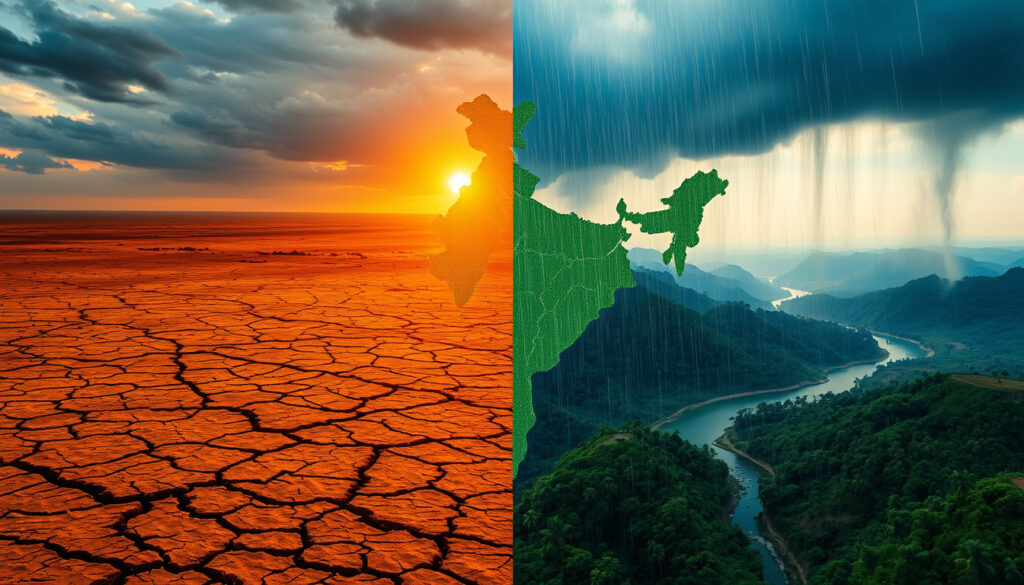
India is experiencing pre-monsoon conditions across most regions, with temperatures ranging from 21°C to 30°C in major urban centers. The India Meteorological Department reports predominantly dry weather with haze affecting several cities, while heat wave risks continue to expand across central and southern regions. Coastal and northeastern areas show signs of changing weather patterns as the country moves deeper into April.
The current atmospheric setup reflects typical pre-monsoon dynamics, with contrasting conditions prevailing across different geographical zones. While northern and western cities grapple with elevated temperatures and reduced air quality, the northeastern states are witnessing scattered rainfall and thunderstorm activity. These conditions are expected to persist over the coming days as regional weather systems continue to evolve.
Current Weather Snapshot Across Major Indian Cities
IMD data reveals significant variations in weather conditions across India’s top metropolitan areas. The following overview captures the essential parameters for planning daily activities and understanding regional weather patterns.
Temperature ranges from 21.2°C in Pune to 30.5°C in Hyderabad, with most cities experiencing maximum temperatures between 34-40°C during afternoon hours.
- Delhi recorded maximum temperatures reaching 38.2°C with minimum dropping to 19.4°C, under hazy conditions with calm winds
- Mumbai experienced a high of 34.6°C with humidity levels at 74%, contributing to muggy conditions
- Kolkata saw temperatures between 27.5°C and 36.0°C with humidity peaking at 86%
- Chennai reported maximum of 36.9°C with the highest humidity at 89% among major cities
- Pune recorded the highest maximum temperature at 39.9°C despite a relatively comfortable minimum of 18.9°C
- Bengaluru maintained moderate conditions with clear skies and temperatures around 26.8°C
- Hyderabad experienced the highest current temperature at 30.5°C under hazy skies
- Ahmedabad reported smoke and fog conditions with temperatures at 27.0°C
| City | Current Temp (°C) | Max/Min (°C) | Conditions | Wind (km/h) | Humidity (%) |
|---|---|---|---|---|---|
| Delhi | 22.6 | 38.2 / 19.4 | Haze, calm | 0, Calm | 66 |
| Mumbai | 27.0 | 34.6 / 25.0 | Haze | 7.4 | 74 |
| Kolkata | 28.8 | 36.0 / 27.5 | Haze | 5.6, SW | 86 |
| Chennai | 29.0 | 36.9 / 27.6 | Partly Cloudy | 11.1 | 89 |
| Pune | 21.2 | 39.9 / 18.9 | Clear Sky | 0, Calm | 48 |
| Bengaluru | 26.8 | — | Mainly Clear | 3.7, Calm | 66 |
| Hyderabad | 30.5 | — | Haze, calm | 1.9, Calm | 58 |
| Ahmedabad | 27.0 | — | Smoke Fog | 11.1, W-SW | 42 |
Regional Weather Patterns and Forecast Trends
Northeastern and Himalayan Regions
The northeastern states are experiencing a different weather regime compared to the rest of the country. According to IMD bulletins, Assam and Meghalaya are forecast to receive scattered to widespread light to moderate rainfall from April 14-18. Similar conditions are expected over Nagaland, Manipur, Mizoram, and Tripura during the same period.
Thunderstorm activity accompanied by lightning and gusty winds reaching 30-50 kmph has been forecast for these regions. The western Himalayan region, including Himachal Pradesh, is expected to see isolated to scattered rainfall and thunderstorm activity beginning April 17 and continuing through April 19.
No rainfall has been recorded in Delhi, Mumbai, Kolkata, Chennai, or Pune today, with all stations reporting 0.0 mm precipitation. Source: IMD Pune
Heat Wave Conditions
Heat wave conditions have been officially recorded in isolated places across Telangana, Madhya Maharashtra, and North Interior Karnataka today. The IMD has warned that these conditions will expand over the next three days to include Chhattisgarh, Madhya Pradesh, Maharashtra, Odisha, and Rayalaseema regions.
Hot and humid weather is affecting isolated areas in Andhra Pradesh, Coastal Karnataka, Gangetic West Bengal, Gujarat, Kerala, Odisha, and Tamil Nadu. Residents in these regions should take appropriate precautions against heat-related health risks.
Monsoon Status and Atmospheric Conditions
The southwest monsoon remains inactive as India is currently in the pre-monsoon season. Private forecasting agency Skymet Weather has issued its 2026 Monsoon Forecast, highlighting variable rainfall distribution patterns expected for the upcoming season. The forecast indicates higher rainfall in some areas while drought risks persist in others.
Skymet also noted the development of the first Pacific super typhoon named ‘Sinlaku’, though current projections indicate no landfall threat to the Indian subcontinent. The IMD continues to focus on current thunderstorm systems and has not issued any southwest monsoon alerts at this stage.
Air Quality and Environmental Factors
Haze and smoke fog conditions have been reported across multiple major cities, including Delhi, Mumbai, Kolkata, Hyderabad, and Ahmedabad. While specific AQI values are not available in current IMD reports, atmospheric conditions suggest moderate to poor air quality in affected urban centers. For those monitoring air quality trends and seeking to understand broader environmental connections, exploring indoor air quality basics may provide relevant context.
Humidity levels vary significantly across regions, ranging from 42% in Ahmedabad to 89% in Chennai. Wind patterns remain predominantly calm across most cities, with speeds between 0-11 km/h. However, areas experiencing thunderstorm activity can expect gusts reaching 30-50 kmph.
Hourly and Extended Forecast Timeline
Current IMD bulletins do not include detailed hourly forecasts for major cities. Private services such as Skymet Weather provide sample hourly data showing temperature ranges of 24-29°C during early morning hours in mid-April, though location-specific details remain limited.
For Gurgaon and surrounding Delhi NCR regions, available data shows maximum temperatures reaching 39.1°C over the past 24 hours, with sunset occurring at 18:41 IST and sunrise the following day at 06:09 IST. Weather trends indicate a continued warming pattern for the region.
- Today: Dry conditions with haze in northern and western cities; isolated heat wave in southern-central regions
- April 14-17: Thunderstorm activity intensifies in northeastern states with rainfall and gusty winds
- April 17-19: Rainfall expected in western Himalayan region including Himachal Pradesh
- Next 3 Days: Heat wave conditions expanding to additional states including Chhattisgarh, Odisha
- Widespread rainfall forecast for Northeast India and western peninsular regions over the coming days
Understanding Forecast Accuracy and Limitations
Short-term weather forecasts typically maintain accuracy rates of 80-90% for temperature predictions and slightly lower for precipitation forecasts. Localized weather events such as thunderstorms may introduce additional variability that affects precision.
| Established Information | Information Requiring Verification |
| Current temperatures across 9 major cities | Detailed hourly forecasts for specific locations |
| Heat wave warnings for identified regions | UV index values for metropolitan areas |
| Thunderstorm activity in northeastern states | Exact timing of monsoon onset |
| Air quality conditions (haze/smoke) | Numerical AQI data for cities |
| Humidity and wind patterns | Specific rainfall amounts in forecast zones |
Broader Context of Current Weather Patterns
The current weather scenario reflects India’s position in the transitional period between winter and monsoon seasons. Pre-monsoon months typically witness maximum temperature peaks across central and northern regions, while moisture incursion begins affecting eastern and northeastern states. These patterns align with historical climate data maintained by meteorological agencies.
Regional variations are pronounced during this period, with coastal areas experiencing higher humidity and heat indices despite moderate temperatures, while interior regions face more extreme temperature fluctuations between day and night. The World Meteorological Organization recognizes India’s meteorological service as operating since 1875, demonstrating long-standing commitment to weather monitoring and prediction. Those interested in exploring how local environmental practices contribute to broader ecosystem health may find value in reviewing composting practices guide for insights into sustainable community initiatives.
Official Sources and Information Channels
The India Meteorological Department operates the most comprehensive weather monitoring network in the country. Daily bulletins are validated between 0830 IST each day, providing updated forecasts and warnings. IMD’s color-coded warning system ranges from green (no action required) to red, where red specifically indicates “Take Action” rather than “Red Alert” as sometimes reported.
The India Meteorological Department provides city-specific forecasts through mausam.imd.gov.in, with additional information available by telephone at 011-2434-4599.
For extended forecasts and specialized weather information, residents can access regional meteorological centers and authorized private forecasting services. All official alerts and updates are published through mausam.imd.gov.in, ensuring access to verified information.
Key Takeaways for Current Weather Conditions
India’s weather landscape presents contrasting conditions across different regions. Northern and central cities face elevated temperatures and heat wave risks, while northeastern states experience monsoon-like activity with thunderstorms and rainfall. Coastal areas contend with high humidity levels that compound thermal discomfort.
Air quality remains a concern in major urban centers experiencing haze and smoke fog conditions. Residents in affected areas should monitor official advisories and take appropriate health precautions.
Frequently Asked Questions
How accurate are IMD weather forecasts?
Short-term forecasts typically achieve 80-90% accuracy for temperature predictions, though localized events like thunderstorms may introduce greater variability.
When does the monsoon season officially begin in India?
The southwest monsoon typically arrives over Kerala around June 1, though the IMD has not issued official onset predictions for 2026 at this time.
What does a red weather warning from IMD mean?
According to IMD guidelines, a red warning indicates “Take Action” and signifies that residents should take preventive measures against expected severe weather conditions.
Which regions are currently experiencing heat wave conditions?
Heat waves have been recorded in isolated places in Telangana, Madhya Maharashtra, and North Interior Karnataka, with expansion forecast to additional states over the next three days.
Where can I find the most reliable weather information for my city?
The India Meteorological Department operates mausam.imd.gov.in for city-specific forecasts and issues color-coded warnings for severe weather events.
What causes haze conditions in Indian cities?
Haze typically results from suspended particulate matter, often combined with humidity and calm wind conditions that prevent dispersion of pollutants.
Are thunderstorms expected in northern India this week?
Rainfall and thunderstorm activity is forecast to begin in Himachal Pradesh around April 17, spreading to Punjab and Haryana by April 17-18.
Related stories


Liam O'Brien covers Australian politics and public affairs for Coast Monitor.