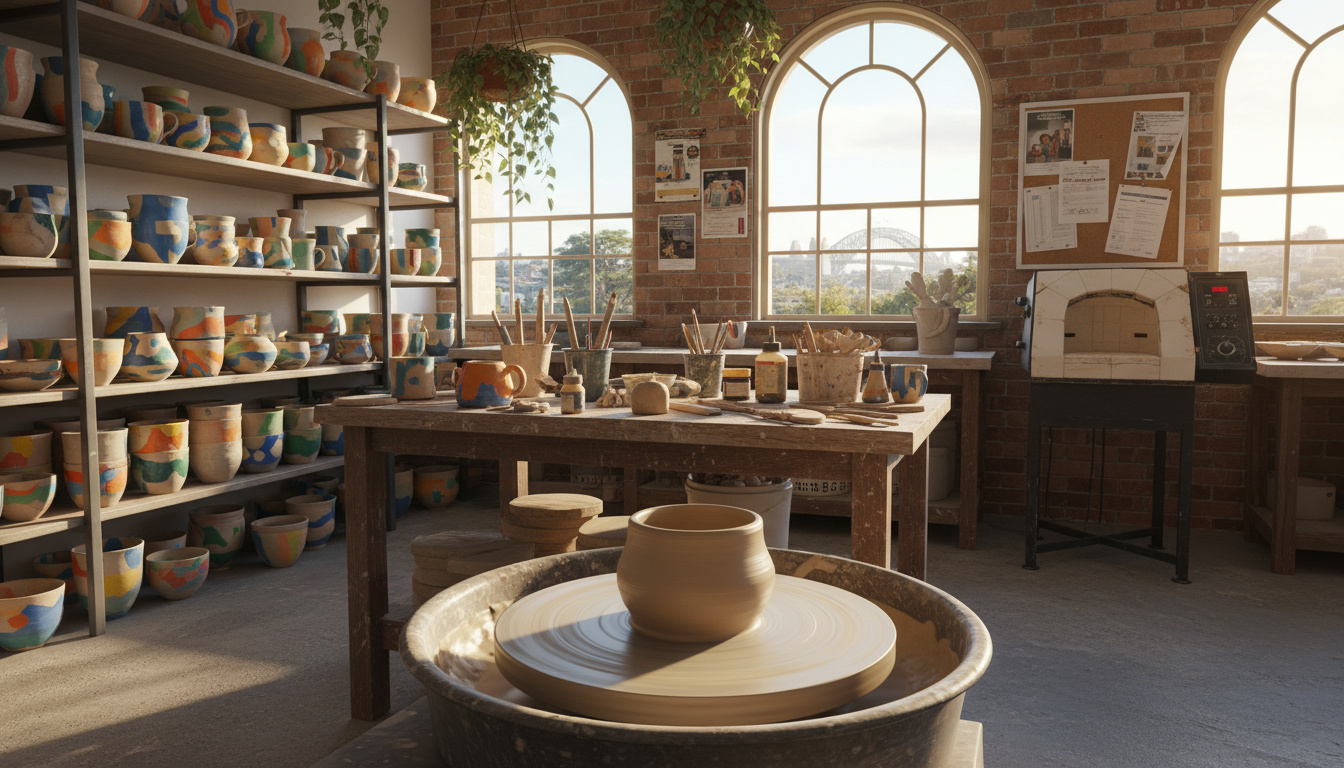
Sydney’s pottery scene has undergone significant expansion, with studios across the Inner West, CBD, and North Shore offering structured pathways for novices. Classes range from single-session tasters to comprehensive eight-week programmes, accommodating diverse schedules and commitment levels.
The post-pandemic surge in demand for tactile, screen-free hobbies has driven established venues and newer operations to expand their beginner offerings. Clay Sydney now runs two large studios in Enmore and Marrickville, while eco-ceramics studio ClayGround operates in Bondi and Rosebery.
Materials and firing costs typically factor into upfront pricing, though specific inclusions vary by venue. Locations concentrate heavily in Enmore, Marrickville, Surry Hills, and Glebe, with satellite studios emerging in Bondi and Crows Nest.
Which Pottery Studios Offer the Best Classes in Sydney?
| Top Studios | Price Range | Locations | Class Types |
|---|---|---|---|
| Clay Sydney | Course-based | Enmore, Marrickville | Hand-building, wheel throwing |
| The Pottery Shed | $79 taster | Surry Hills | Wheel throwing, 3-class courses |
| Kil.N.It | Not-for-profit rates | Glebe | Training Wheels 8-week |
| Sydney Clay Studio | Course fees vary | St Peters | 4-week throwing/hand-building |
| Carol Hudson Studio | $180-$490 | Glebe | Mindfulness-focused beginner courses |
| Claypool | Membership options | Botany | 6-week courses, 24/7 access |
| Bondi Clay | $79 taster | Bondi | Keep cup design, wheel throwing |
- Most classes require no prior clay experience; studios cater to absolute beginners.
- Weekly sessions typically run 2-3 hours, with one-off taster options available for trial.
- Inner West and CBD dominate studio density, though North Shore options exist.
- Materials, equipment, and initial firing costs usually bundle into session fees.
- High post-pandemic demand necessitates advance booking for popular evening slots.
- Small group formats average 6-12 students, with some studios offering individual instruction.
- Corporate team bonding and private event bookings available at multiple venues.
| Studio | Beginner Offering | Duration | Price Point |
|---|---|---|---|
| Clay Sydney | Wine and Clay nights | Evening sessions | Course-based |
| The Pottery Shed | Wheel throwing taster | 2.5 hours | $79 |
| Kil.N.It | Training Wheels workshop | 8 weeks | Course fees vary |
| Carol Hudson | Beginner’s course | 4+ weeks | $490 |
| Sydney Clay Studio | Throwing and hand-building | 4 weeks (2-3h) | Course fees vary |
| Claypool | Beginner run-downs | 6 weeks | Membership available |
| Silky Shapes | Cylindrical piece focus | Weekly classes | Course fees vary |
How Do Beginner Pottery Classes Work in Sydney?
Entry-level instruction typically divides between hand-building and wheel throwing. Hand-building involves pinching, coiling, and slab construction without mechanical assistance. Wheel throwing requires operating a spinning potter’s wheel to centre and shape clay, demanding coordination that The Pottery Shed describes as teachable within their 2.5-hour orientation sessions.
Structured programmes progress methodically. The eight-week “Training Wheels” workshop at Kil.N.It teaches cylinder and bowl throwing, centring, turning, joining, and glazing. Sydney Community College offers similar duration courses with 2-hour weekly sessions. These longer formats allow for skill consolidation between classes.
Single-session workshops cost approximately $79 for 2-2.5 hours at multiple studios. These provide orientation, demonstration, and hands-on practice without requiring multi-week commitments. Students typically complete one or two pieces during the session, making them suitable for testing interest before enrolling in comprehensive courses.
What Techniques Will Beginners Learn?
Fundamental skills include centring clay on the wheel, opening the centred mass, pulling walls to form cylinders, and trimming bases. Hand-building covers pinch pots, coil construction, and slab joining. Most studios also introduce basic glazing techniques, though complex glaze chemistry typically remains beyond beginner scope.
What Should Beginners Bring?
Studios provide clay, tools, and equipment. Students should wear old clothes that can tolerate clay dust and water. Some venues recommend bringing an apron, though this varies by location. Fingernails should remain short for wheel throwing effectiveness.
Where Are Pottery Classes Located Across Sydney?
Inner West and Adjacent Areas
The Inner West hosts the highest density of pottery studios. Clay Sydney operates substantial facilities in Enmore and Marrickville, offering social “Wine and Clay nights” alongside technical instruction. Kil.N.It in Glebe functions as a not-for-profit creative space with experimental mixed media options. St Peters houses Sydney Clay Studio, which provides kiln access for firing completed work.
Inner City and Eastern Suburbs
Surry Hills hosts what The Pottery Shed describes as Sydney’s original pottery school, offering affordable wheel-throwing instruction since before the recent craft resurgence. Botany’s Claypool, operating since 2013, provides unlimited seven-day-a-week access for members. Bondi Clay and ClayGround serve the eastern beaches with taster classes and eco-ceramics focuses respectively.
North Shore Options
Crows Nest provides alternatives for northern residents. Silky Shapes Studio and Klaypots offer beginner classes in throwing, trimming, and glazing cylindrical pieces, with advanced projects available for progressing students including teapot construction and slip casting.
Enmore and Marrickville studios sit near major bus routes and train stations. Glebe locations serve students from the CBD via light rail. Botany and Rosebery studios typically require private transport or bus connections from the city centre.
What Do Pottery Classes Cost and Who Can Attend?
Pricing Structures
Introductory options range from $79-$85 for 2-2.5 hour taster sessions. Individual instruction at Carol Hudson Studio costs $180 per 90-minute session, while their full beginner’s course exceeds $490. Multi-class packages at Project Snail span $85-$320 depending on level.
Structured courses require larger investments. Four-week programmes at Sydney Clay Studio focus on throwing and hand-building. Six-week courses at Claypool and eight-week options at Sydney Community College provide deeper skill development.
Age Requirements and Family Options
Adult classes dominate the market, though several studios accommodate younger participants. The Pottery Shed accepts beginners aged 12 and up in their basic three-class courses. ClayGround caters to all ages and skill levels. Something At Mary’s in Bundeana starts individual instruction with groups as small as two students, allowing family pairings.
While materials and initial firing costs usually bundle into course fees, some studios charge separately for glaze materials or extensive kiln use. Confirm whether storage for works-in-progress between sessions requires additional payment, particularly for multi-week courses.
What Is the Typical Progression for Beginners?
- Hand-building fundamentals; pinch pots and coil construction.
- Wheel throwing introduction; centring clay and opening forms.
- Cylinder formation and wall pulling; basic shaping techniques.
- Trimming leather-hard pieces; refining bases and profiles.
- Surface decoration; carving, shaping, and joining attachments.
- Glazing preparation; waxing feet and dip glazing.
- Firing completion; advanced projects or studio membership transition.
What Information Is Definitive Versus Variable?
| Established Information | Uncertain or Variable Factors |
|---|---|
| Classes widely available in Inner West and CBD | Real-time availability requires direct studio confirmation |
| Beginner-friendly instruction standard across venues | Exact pricing fluctuates by studio and course length |
| Materials typically included in session fees | Firing turnaround times vary by kiln schedule |
| Wheel throwing and hand-building core to all curricula | Individual instructor assignment rarely guaranteed |
Why Has Pottery Become Popular in Sydney?
The resurgence traces partly to post-2020 shifts toward tactile, digital-detox hobbies. Sydney’s established studios report sustained demand from professionals seeking stress relief through clay manipulation. The mindfulness aspect emphasized by Carol Hudson Studio reflects broader wellness trends integrating creative practice with mental health.
Historically, The Pottery Shed anchored Sydney’s ceramic education long before recent expansions. The current landscape now supports specialized niches from eco-ceramics to corporate team building, with venues across the city accommodating everything from keep cup design to sculptural hand-building.
This creative infrastructure parallels Sydney’s broader maker movement, connecting pottery with Outdoor Coffee Table – Best Materials Sizes and Picks craftsmanship and garden design aesthetics like those seen in Weeping Lilly Pilly – Care Pruning and Growing Guide landscaping.
What Do Students and Studios Report?
“Training Wheels workshop teaching basic cylinder and bowl throwing, centring, turning, joining, and glazing techniques.”
— Kil.N.It studio description
“Create your own vessels at social Wine and Clay nights.”
— Clay Sydney programme listing
“Sydney’s original pottery school with affordable wheel-throwing instruction.”
— The Pottery Shed
How Should You Choose Your First Class?
Select based on geographic convenience, budget constraints, and time availability. Taster sessions suit uncertainty about long-term interest, while eight-week programmes benefit those seeking foundational competence. Verify material inclusions and firing policies before booking. Consider whether the studio offers storage for pieces between sessions, particularly for multi-week commitments.
Common Questions About Sydney Pottery Classes
Are one-day pottery workshops available?
Yes. Multiple studios offer single-session workshops lasting 2-2.5 hours for approximately $79. These accommodate beginners testing interest before enrolling in multi-week programmes spanning four to eight weeks.
What happens in wheel throwing classes?
Instructors demonstrate centring clay on a spinning wheel, opening the form, pulling walls to create cylinders, and trimming bases. Students receive hands-on guidance during practice time, typically completing one or two pieces per session depending on class length.
When do classes typically run?
Most studios operate classes year-round with increased availability during evenings and weekends. Peak demand occurs on weeknights, requiring advance booking. Some venues like Claypool offer 24/7 membership access.
How difficult is wheel throwing for beginners?
Wheel throwing requires coordination that develops over multiple sessions. Most students achieve basic centring within the first class, though consistent results typically require the full duration of structured four to eight-week courses.
Can children attend pottery classes?
Yes, though age restrictions apply. The Pottery Shed accepts students aged 12 and up. ClayGround and other studios cater to families, with some offering private sessions for younger children when accompanied by adults.
When can I collect finished pottery?
Firing cycles typically require two to three weeks between forming and collection, allowing for bisque firing, glazing, and glaze firing. Studios notify students when pieces become available for pickup.
Related stories


Liam O'Brien covers Australian politics and public affairs for Coast Monitor.